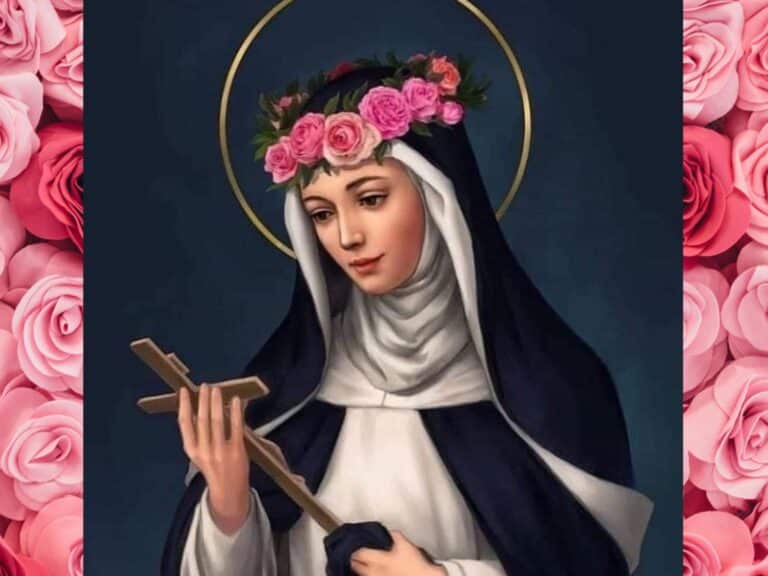
Saint Rose of Lima, whose original name was Isabel Flores de Oliva, is a notable figure in the history of the Catholic Church. Born in Lima, Peru, in 1586, she is considered the first saint to be canonized in the Americas. Her life of devotion, love for Christ and care for those in need made her an inspiration to believers around the world. In this article, we will explore the journey of this extraordinary saint, from her origins to her canonization and the ongoing devotion surrounding her legacy.
Origins of Santa Rosa de Lima
Isabel was born on April 20, 1586, in Lima, capital of the Viceroyalty of Peru. She was the thirteenth daughter of Gaspar Flores and Maria de Oliva, a noble family of Spanish origin. From the beginning, Rosa, as she was known to everyone, demonstrated a special inclination towards prayer and spirituality.
Her nurse, Mariana, who was of indigenous origin, noticed the girl's unusual beauty and called her “Rosa”. The name stuck and was later confirmed at Confirmation. Rosa grew up in a devout Christian environment, and her faith was deeply influenced by her devotion to the Virgin Mary. From a young age, she felt a calling to dedicate her life to God.
Choosing the Religious Path
At twenty-three, Rosa decided to join the Dominican Third Order, following the example of her patron saint, Saint Catherine of Siena. Her choice was met with disapproval by her family, who expected her to marry and help support the household. However, Rosa was determined to follow her religious vocation.
Despite family pleas, she dedicated herself completely to religious life, living a life of renunciation, penance and prayer. Rosa fasted rigorously and underwent severe penance to seek greater closeness to God. She also cut her hair and thickened her hands by working on the farm with her parents to overcome vanity and dedicate herself completely to spiritual life.
Care for the Needy
Rosa experienced poverty when her family's fortunes suffered a sharp decline due to the bankruptcy of her paternal business. She worked tirelessly as a maid, gardener and embroiderer to support her family and help those in need. When making deliveries to customers' homes, she took the opportunity to share the Word of Christ and spread her message of love and justice.
In her home, Rosa established a kind of asylum for the less fortunate, where she offered special assistance and care to abandoned children and elderly people, especially from the indigenous community. His charitable work and dedication to serving others inspired many in his community.
Claustral Life and Intimacy with God
From a young age, Rosa aspired to consecrate herself to God in a cloistered life, remaining a “virgin in the world”. As a Dominican Tertiary, she built a small cell in the garden of her family's home, where she spent most of her days in prayer and intimate communion with the Lord. Her cell was a few square meters, and she rarely left it except for her religious obligations.
In her life of prayer and contemplation, Rosa achieved a high degree of mystical experience and closeness to God. She had visions and experienced the Passion of Christ in her own body, with the desire to convert the Spanish and evangelize the indigenous people. His life of holiness and love for Christ attracted many who sought his guidance and blessing.
Canonization and Continuous Devotion
Rosa's reputation for holiness grew rapidly during her lifetime, and soon after her death, on August 24, 1617, crowds of people attended her funeral. Because of the many miracles attributed to her intercession, Rosa was already considered a saint by her contemporaries.
In 1668, she was beatified by Pope Clement IX, and in 1671, she was canonized by Pope Clement X. Saint Rose of Lima became the first woman to be
canonized in the Americas, being recognized as Patroness of Peru, Latin America, the Indies and the Philippines.
Devotion and Legacy
Devotion to Saint Rose of Lima spread quickly throughout Latin American countries, where she is venerated as the Patron Saint of Gardeners and Flower Growers. Furthermore, she is invoked for protection against volcanic eruptions and in cases of wounds or family quarrels.
In commemoration of the 400th anniversary of her death, a Jubilee Year was celebrated, honoring the thousands of prayers that Saint Rose answered over four centuries.
Conclusion
The life of Saint Rose of Lima is a story of deep devotion, love for Christ and service to those in need. His determination to follow his religious vocation, despite difficulties and opposition, inspired generations of believers. His legacy lives on through devotion and belief in his miraculous intercession. Santa Rosa de Lima is a timeless example of holiness and generosity, and her story continues to touch the hearts of those who seek a life dedicated to the service of God and others. May your example continue to light the path of believers around the world.