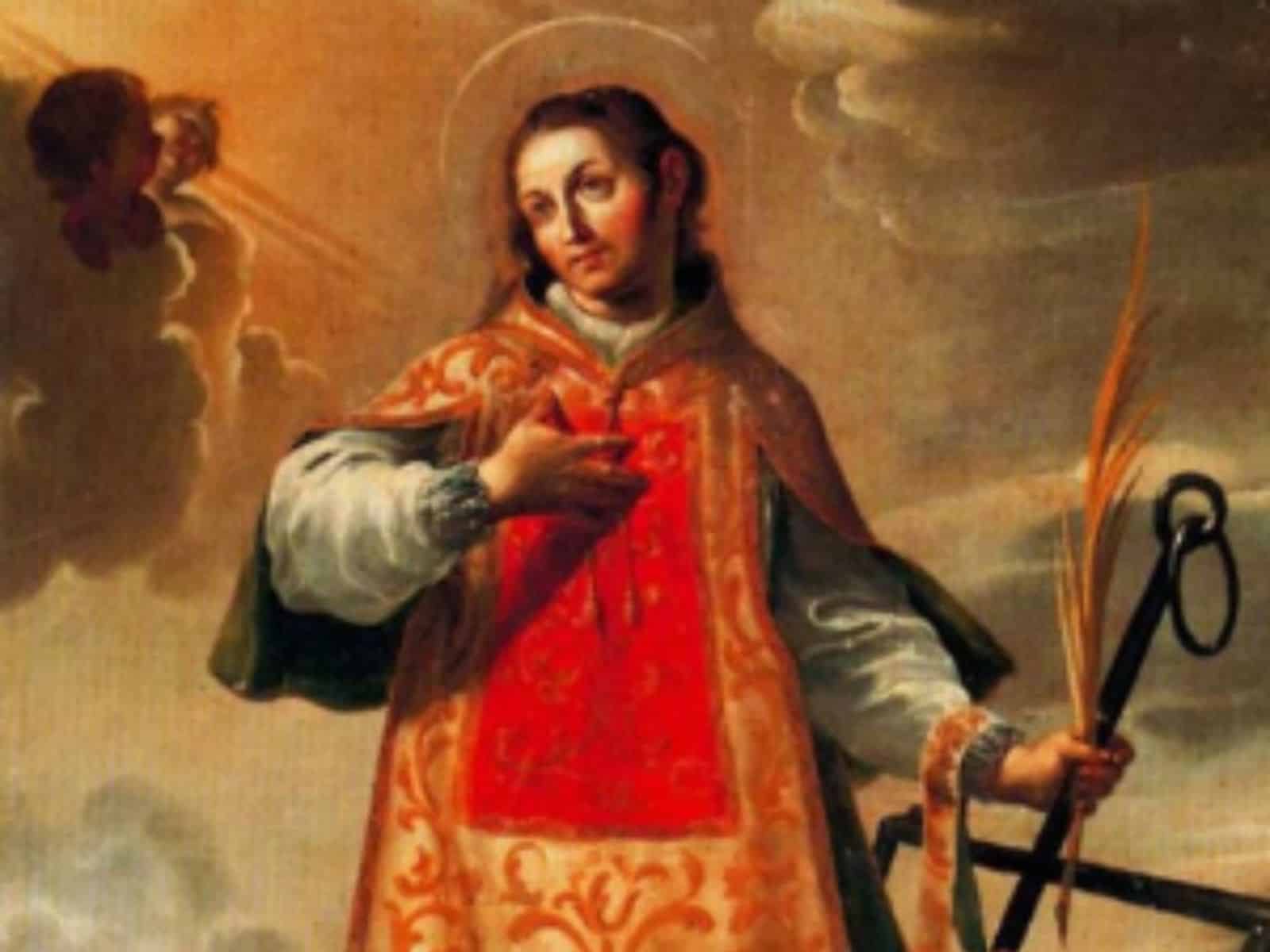
Saint Lawrence, deacon and martyr
Saint Lawrence, also known as Lawrence of Rome, was a 3rd century holy martyr, born in Spain. His story is marked by his piety, dedication to charity and courage in the face of the religious persecution of his time.
Friendship with Pope Sixtus II and service as archdeacon
It is said that Saint Lawrence had a strong friendship with Pope Sixtus II, who entrusted him with the important role of archdeacon. In this position, Lourenço had the responsibility of managing the Church's goods and offerings to help those most in need, such as the poor, orphans and widows.
The challenge of persecution and the offering of “Church treasures”
In the year 258 AD, Emperor Valerian issued a decree that condemned all bishops, presbyters and deacons of the Catholic Church to death. Saint Lawrence, along with some deacons and Pope Sixtus II himself, was arrested during this persecution.
Although Pope Sixtus II was assassinated on August 6, the emperor decided to spare Saint Lawrence's life and made a defiant request. He demanded that Lourenço hand over the “treasures of the Church” to him. In response, Saint Lawrence gathered the poor, sick, blind, lame, widows and elderly, presenting them to the emperor and declaring that these were the true treasures of the Church, which never diminished and were present in all places where charity was practiced. .
Martyrdom and unshakable faith
Saint Lawrence's response did not please the emperor, who decided to sentence him to death. Four days after the martyrdom of Saint Sixtus II, on August 10, Saint Lawrence was also martyred. According to old reports, he was burned alive on a grill.
Saint Ambrose, in an ancient “Passion” of Saint Lawrence, recounts an imaginary meeting between the martyr and Pope Sixtus II, along the road to martyrdom. In this meeting, Saint Lawrence expresses his willingness to follow the Pope in sacrifice, showing his fidelity and courage in the face of death.
Martyrdom as the supreme proof of love
The martyrdom of Saint Lawrence is considered a supreme proof of love for God and neighbor. Saint Leo the Great described Lawrence's torture as a flame that did not devastate Christ's charity, as the fire that burned him on the outside was milder than the one that burned on the inside.
The basilica and the church in honor of Saint Lawrence
After the martyrdom, the body of Saint Lawrence was buried in Via Tiburtina. Emperor Constantine ordered the construction of a basilica in his honor, which was restored in the 20th century after damage caused during World War II.
Furthermore, a church was built at the exact location of his martyrdom, known as the church of Saint Lawrence in Panisperna. According to some sources, the name Panisperna derives from the custom of distributing bread and ham to the poor in honor of the saint on August 10th.
The legacy of Saint Lawrence
Saint Lawrence's testimony continues to inspire generations, highlighting the importance of charity, courage in the face of persecution and unshakable faith in God. He is remembered as an outstanding example of service to those most in need and a martyr who witnessed the love of Christ to the end.
The basilica and the church in his honor are places of pilgrimage for many believers, who seek to follow the example of Saint Lawrence in their own lives. His feast day is celebrated on August 10th, remembering his dedication to the cause of the Gospel and Christian charity.