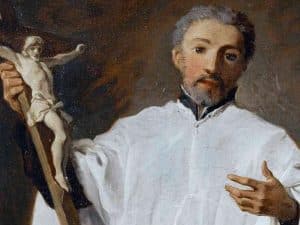
Saint John of Ávila
João de Ávila was born on January 6, 1499, in Almodóvar del Campo, Spain. He studied Law at the University of Salamanca, but went through a profound conversion experience, deciding to abandon his studies, return to his parents' house and become a priest. At the age of 27, he was ordained a priest in 1526. He had the desire to be a missionary in America, but God's will was different, and he ended up carrying out his ministry in his home country. I began to experience the pressures of God in my life.
Life of Saint John of Ávila
Another press came shortly after ordered. In 1931, because of a misinterpretation of a sermon, João was arrested by the Royal Inquisition. Spending two years in prison, he began the first version of his work “Audi, filia”, in which he speaks of the spousal love between Christ and his Church, in ascetic advice to a young woman he accompanied. According to Benedict XVI, it was there, in that time of deprivation, unjust persecution and misunderstanding, that John “received the grace to penetrate with singular depth the mystery of God's love and the great benefit done to humanity by the Redeemer Jesus Christ”.
God's will
Acquitted in 1533, he fervently resumed preaching the Gospel in Spain in several cities. His only desire was to convert souls. He was sensitive to the inspirations of the Spirit to the Church of his time, which was going through difficult tests, arising from humanism and the reform process that was taking place in Europe. He unceasingly served penitents through the Sacrament of Reconciliation.
Particularity
In his inner life, he valued poverty and the education of children and young people, especially those preparing for the priesthood. In addition to Audi filia, classified by Benedict XVI as a classic of spirituality, he wrote “The Catechism, or Christian Doctrine”, “The Treatise on the Love of God”, “The Treatise on the Priesthood”, “The Sermons and Homilies”, in addition to of biblical commentaries from the Letter to the Galatians to the First Letter of John.
Merits
He became a great theologian, but, as a son of his time, he also made humanist contributions such as inventions of some engineering works, foundation of minor and major colleges that, after the Council of Trent, were transformed into conciliar seminaries, creation of the University de Baeza, in addition to the proposal to create an International Court of Arbitration to avoid wars.
Fruits
He was responsible for the conversion of Saint John of God and Saint Francis Borgia. In his beatification process, it is stated that “he never preached a sermon without several souls converting to God”. The effectiveness of his oratory lay, as John himself said, in loving God very much, in dedicating himself much more to prayer than to books: in losing himself in the presence of the Lord. He was, in the words of Paul VI, who canonized him, “a faithful copy of Saint Paul”.
Saint friends
He was a contemporary and friend of other saints: Ignatius of Loyola, Pedro of Alcântara, Teresa of Jesus, John of the Cross… Signs that a life surrounded by holy friendships is never sterile. “A great Friend, who is God, who captures our hearts to his love […] and He asks us to have many other friends, who are his saints”, wrote John of Ávila (Letter 222).
One of these friendships would lead him to live another press. Due to his proximity to Saint Ignatius of Loyola, he thought about becoming a Jesuit, but the project was made impossible by the deterioration of João de Ávila's health. The Master of Ávila, as he became known, spent the last 16 years of his life seriously ill. Almost blind, he died at the age of 79, on May 10, 1569, with a crucifix in his hand, in the small town of Montilla.
Source: Canção Nova