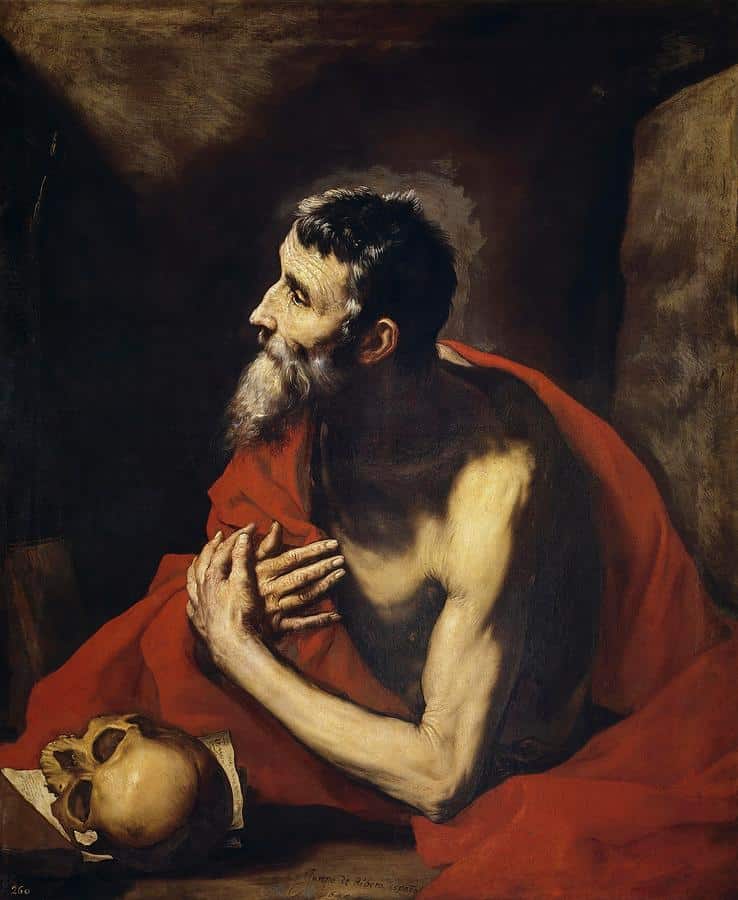
Saint Jerome
Sophronius Eusebius Jerome, known as Saint Jerome, is a notable figure in the history of Christianity. Born in the city of Estridão, present-day Croatia, around 347, he had a life path full of learning, spirituality and contributions that shaped Western Christianity. This biographical article highlights the main events and achievements of this saint, whose devotion and dedication to the Word of God left a lasting legacy.
Youth and Conversion
Jerônimo was born into a wealthy Christian family. Initially, his life was marked by a solid education, completing his studies in Rome with the support of his parents. However, during his youth, he indulged in worldly pleasures, moving away from faith. But this detour was temporary, and he soon regretted his ways. Jerome received Baptism and chose a life of contemplation and service to God.
Monastic and Ascetic Life
His spiritual quest led him to join a community of ascetics in Aquileia. However, disagreements and enmity in this environment led him to leave the group. Jerome then embarked on a journey that took him across the East, passing through places such as Trier and Antioch. It was in Antioch that he improved his knowledge of the Greek language, a skill that would become crucial in his later life.
After this phase, Jerome isolated himself in the desert of Chalcis, south of Aleppo, where he dedicated four years to studying, learning Hebrew and transcribing the writings of the Church Fathers. These years of meditation, solitude and intense reading of the Scriptures led him to reflect on the difference between the pagan mentality and the Christian life.
Ordination and Continuous Study
Jerome returned to Antioch and, in 379, was ordained a priest. His quest for knowledge took him to Constantinople, where he continued to study Greek under the guidance of Saint Gregory Nazianzen. It was in Constantinople that Jerome began to stand out as a scholar and scholar.
Personal Secretary of Pope Damasus
In 382, Jerome traveled to Rome for a meeting called by Pope Damasus, intended to address the Antioch schism. Recognized for his fame as an ascetic and scholar, the Pope chose him as his personal secretary and advisor. It was during this period that Pope Damasus commissioned Jerome to carry out a new translation of the biblical texts into Latin.
The Vulgate: Its Great Achievement
Jerome dedicated much of his life to the work of translating the Bible, a monumental task that would make him famous in the history of the Church. His translation, known as the “Vulgate,” became the official version of the Scriptures in the Latin Church and was confirmed as such at the Council of Trent. The Vulgate is a monumental work that Jerome carried out with tireless dedication, translating the Gospels from Greek and the Old Testament from Hebrew.
Retreat and Literary Contributions
Due to intrigues and conflicts in Rome, Jerome decided to retire to Bethlehem, where he spent the rest of his life. There, he continued his biblical studies and work, always dedicating himself to defending the Christian faith and teaching classical and Christian culture. Even in seclusion, he did not stop writing and producing significant literary works.
Jerome died in his cell, near the Grotto of the Nativity, on September 30, probably in the year 420.
Lasting Legacy
Saint Jerome, with his strong character and imposing personality, was both beloved and controversial in his time. His legacy, however, is undeniable. He is remembered for his dedication to the Word of God, his passion for study, and his significant literary contributions.
The Vulgate, his translation of the Bible into Latin, remains an important and influential work in the history of the Catholic Church. Jerome is an example of how the pursuit of knowledge and devotion to faith can intertwine to leave a lasting impact on religious and cultural history.