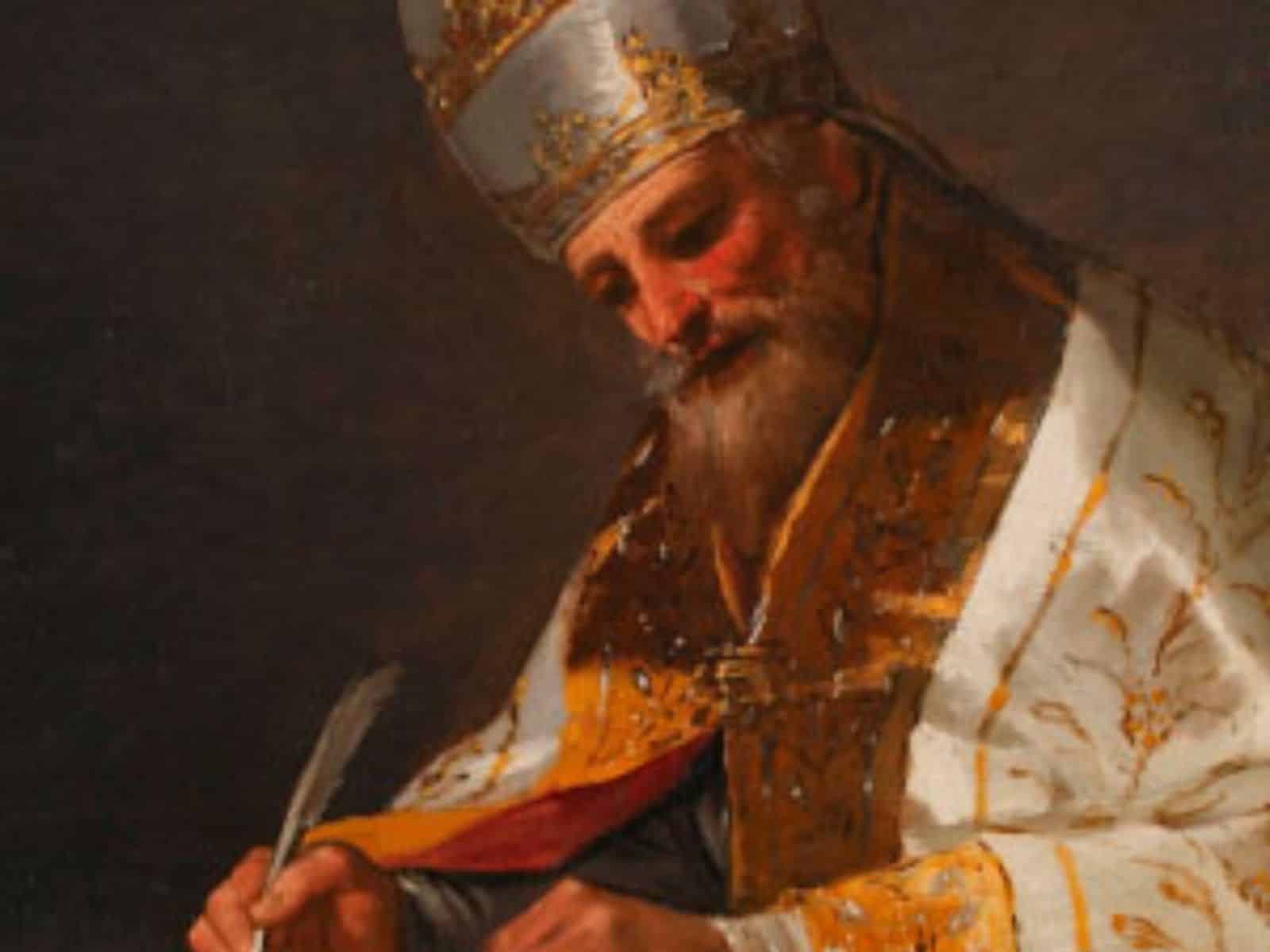
Saint Gregory the Great
Saint Gregory the Great, born in Rome in the year 540, from a patrician family known as Anici, left an indelible mark on the history of the Church. His life is an inspiring testimony of faith, leadership and dedication to Christian service. In this article, we will explore Saint Gregory the Great's journey from his youth to his election as Pope, examining his notable achievements and lasting influence.
The Early Years and the Spiritual Quest
Gregório was born into a deeply Christian family, with his parents, Gordiano and Silvia, being living examples of evangelical values. After completing his law studies, he began a political career that led him to occupy the position of Mayor of the city of Rome. However, his search for a deeper purpose led him to the monastic life.
From Politics to Monastic Life
Moved by an inner calling, Gregory gave up his political career and donated his assets to the poor. He transformed his village in the Celio neighborhood into a monastery dedicated to Santo André. There, he immersed himself in prayer, study of Holy Scripture and the Fathers of the Church, adopting a lifestyle of humility and simplicity.
The Journey to the Papacy
After six years as Apostolic Representative in Constantinople, Pope Pelagius II summoned Gregory back to Rome. With the death of Pelagius II in 590, Gregory was elected Pope. Assuming the throne from Peter, he faced significant challenges, including political corruption, floods, and epidemics. His response was to call on the people to repent, pray and participate in a penitential procession to the Basilica of Saint Mary Major. The story goes that, during this procession, a vision of the archangel Michael about the “Mole Adriana” was interpreted as a divine sign of the end of the epidemic.
Leadership and Transformation
As Pope, Gregory the Great played a key role in reforming ecclesiastical administration. He entrusted the direction of the Roman Curia to Benedictine monks and restructured activities in the various episcopal sees. He advocated that the Church's assets be used for subsistence and the expansion of evangelization. Gregory was also noted for his charity, distributing his own goods to those in need, rescuing prisoners and working for peace treaties.
Theological and Literary Legacy
In addition to his administrative skills, Gregory the Great left a lasting impact on theological and liturgical development. He reformed the celebration of Mass, promoting the liturgical chant known as Gregorian. His works, including “Magna Moralia in Iob” and “Regula Pastoralis”, reveal his deep understanding of Christian morality, humility and pastoral duty.
The “Servant of the Servants of God”
Despite his influence and power as Pope, Gregory the Great maintained a remarkable humility. He referred to himself as “Servus servorum Dei” (Servant of the servants of God), a title that was retained by many later Pontiffs. His legacy of spiritual leadership and charity continued after his death on March 12, 604, when he was buried in St. Peter's Basilica.
Saint Gregory the Great, with his pursuit of holiness, his dedication to charity, and his commitment to ecclesiastical reform, continues to inspire generations of Christians to live lives of service and humility. His influence extends to liturgical singing, moral theology, and ecclesiastical leadership, making him a notable figure in the history of the Catholic Church.