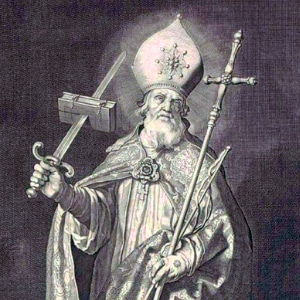
Saint Boniface I
The history of the Catholic Church is marked by notable figures who played crucial roles in its evolution and influence. Among these figures, Saint Boniface stands out, a Pope whose pontificate was marked by internal challenges, struggles for peace and a deep dedication to the Christian cause.
A Singular Origin
Saint Boniface was born in a time of transition, when ecclesiastical issues were constantly evolving. His father, Giocondo, was a Roman priest, and although ecclesiastical celibacy was not yet a strict rule, many priests, including Giocondo, practiced celibacy voluntarily. The ordination of married men was permitted in the Church at the time, except for deacons and priests who were already married. These nuances shaped the environment in which Bonifácio grew up and eventually played an important role.
A Challenging Pontificate
Boniface's path to the papacy was not easy. During Pope Zosimos' previous pontificate, the Church was divided and in conflict. When Boniface was elected Pope in 418, a split still persisted. Although he was chosen as the legitimate Pope, there was a parallel election that resulted in the appointment of an antipope named Eulálio. This duality brought tensions and disagreements not only among the clergy, but also among the Roman people.
The Quest for Peace and Unity
Despite the difficulties, Boniface was determined to restore peace and unity in the Church. He had a deep understanding of the challenges facing the church community and had the knowledge to deal with them. His wisdom was manifested in the way he approached the situation of Antipope Eulalius. Instead of opting for conflict, Bonifácio managed to persuade Eulálio to renounce his position as antipope and, in a gesture of reconciliation, appointed him Bishop. This action not only restored Eulálio's dignity, but also demonstrated Bonifácio's ability to transform adversaries into allies.
Scholarship and Valuable Friendships
Saint Boniface was also known for his scholarship and meaningful friendships. He was a friend of Saint Augustine, one of the great theologians of the time. His friendship with Alipius, bishop of Tagaste, is also notable. Through these connections, Boniface raised the prestige of the Roman See and brought a period of tranquility to the Church.
The Legacy of Saint Boniface
Boniface's pontificate left a lasting impact on the Catholic Church. His ability to deal with the complexities of ecclesiastical politics and to promote peace and reconciliation is remembered as an example of inspirational leadership. His legacy also includes a number of practical achievements, such as the construction of an oratory on Via Salaria, where he found refuge during the turmoil of the double papal election. His dedication to the unity of the Church, his pursuit of peace, and his ability to make wise decisions continue to inspire religious leaders and believers around the world.
In 422, Saint Boniface passed away, but his impact on the history of the Church remains alive. His role as Pope and peacemaker continues to be an example of how wisdom, compassion and the pursuit of unity can shape the course of religious history and positively influence people's lives. His memory is celebrated as a guiding light for the Church and for all those who seek peace and harmony in times of challenge.