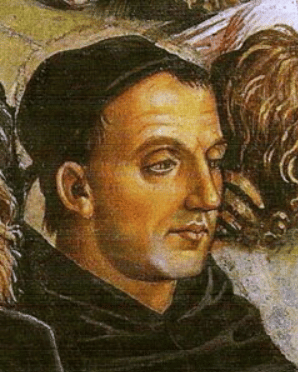
Blessed John of Fiesole (Blessed Angelico)
Giovanni de Fiesole , better known by the name Beato Angelico , was one of the most famous artists of the Middle Ages. Born in Tuscany, at the end of the 14th century, Angélico began to show a natural talent for drawing and miniatures at an early age. As the years went by, his aspiration for the “beautiful” became increasingly intense, culminating in a clear religious vocation.
Painting as prayer
Upon entering the convent of Fiesole, alongside his brother Benedict, Blessed Angélico learned to translate the achievements of his spirit, through prayer, study and austerity, into images full of humanity and mysticism. Crosses, images of Our Lady, Annunciations and altarpieces were some of the expressions of a soul that, through a lot of discipline, knew how to live with its heart in heaven. He painted on his knees, praying before starting the works, and was moved by reproducing Christ on the cross.
Synthesis between Humanism and Faith
Beato Angélico 's art was the perfect synthesis between Humanism and Faith. The sweetness, grace and beatitude of the figures, born from his brush, revealed a harmonious unity between humanism and religion. Unlike other artists of the time, he never touched up his paintings, believing that this was God's will.
Patron saint of artists
Pope Eugene IV invited Blessed Angelico to paint the Vatican. His successor, Nicholas V, could not contain his tears, in front of the frescoes of stories of saints that the friar painted in the private Chapel of the Apostolic Palace. Alongside Benozzo Gozzoli, he left a testimony of himself in the vault of the Chapel of Saint Brice, in the Cathedral of Orvieto.
Angelico became prior of Saint Dominic, in Fiesole, between 1448 and 1450; He developed this role with humility and a spirit of service. He rejected Pope Parentucelli's proposal to occupy the episcopal see of Florence and died, on February 18, 1455, in the convent of Santa Maria sopra Minerva, in Rome.
Blessed João de Fiesole lives to this day as the patron saint of artists and the example that it is possible to unite art and spirituality. His works still testify to the divine beauty, which is capable of connecting us with the Sacred.