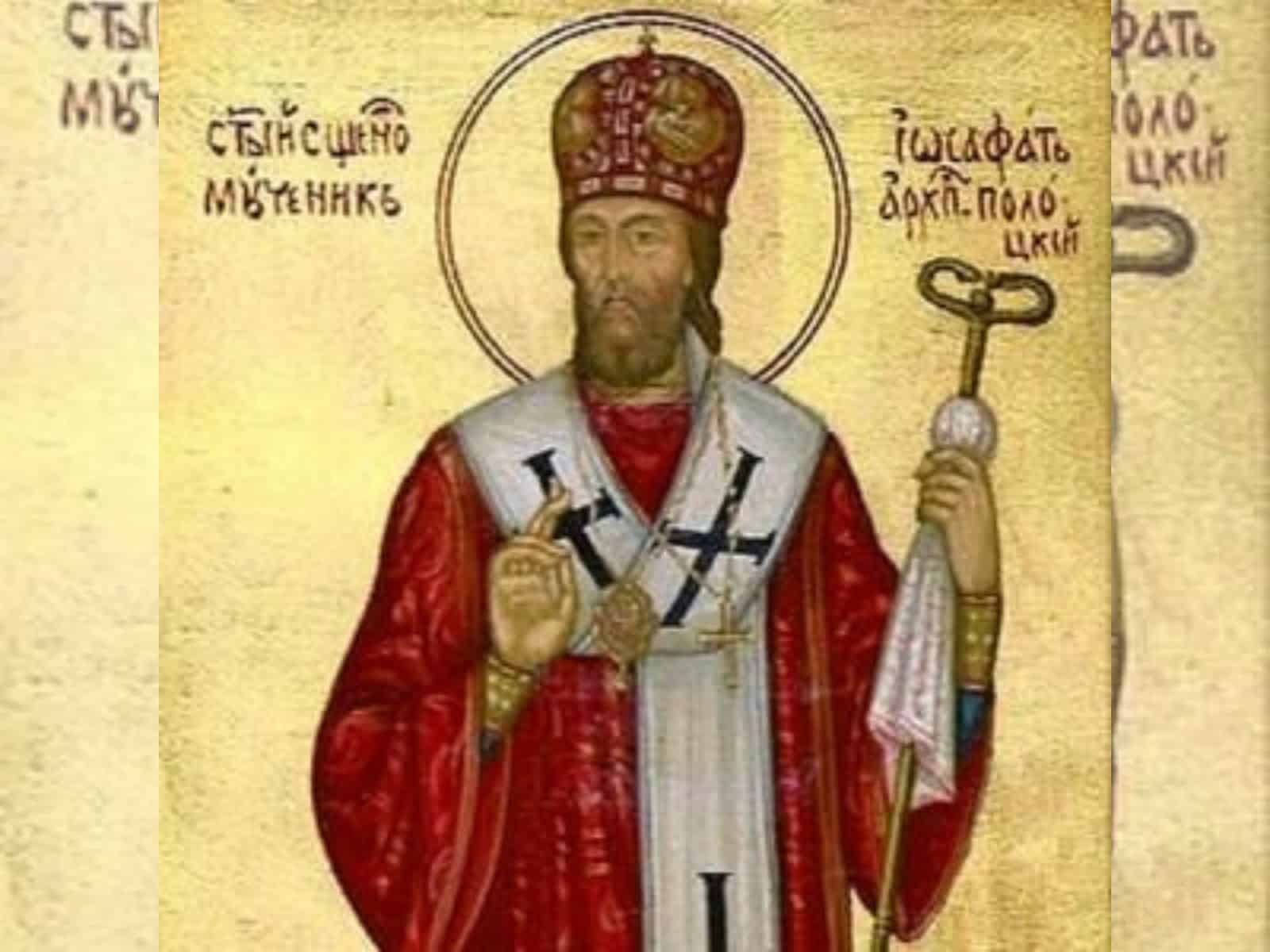
Saint Josaphat
Saint Jehoshaphat, whose baptismal name was John Kuncewicz, was born in Wladimir, Ukraine, in 1580. He came from a family of schismatic Orthodox, who followed the Byzantine Church, not the Roman Church. However, after joining the Order of Saint Basil and embracing the Catholic faith, he changed his name to Josaphat. In the Catholic Church, he became known as an apostle of unity and an advocate of reconciliation between the Orthodox Church and the Catholic Church.
Saint Josaphat’s life as a monk
Jehoshaphat became a monk at age 24 and dedicated his life to promoting unity and evangelization. He was ordained a priest in 1609 and soon distinguished himself as a spiritual leader. By virtue of his abilities and virtues, he was appointed superior of the convents of Briten and later archimandrite of Vilna.
The charity of Saint Josaphat
One of the most striking characteristics of Saint Josaphat was his charity. He always had the doors of his home and heart open to welcome the poor and needy. He not only promoted charity through his testimony, but also spent time promoting the unity of the Byzantine and Roman Churches. As a result, he was called “Uniates” by the Orthodox and accused of betraying his homeland and faith.
The apostolate of Saint Josaphat
Saint Josaphat dedicated himself to the work of unifying the Churches and seeking reconciliation between the schismatics and heretics of the Orthodox Church and the Chair of Saint Peter. His apostolate was crowned with success, as many schismatics returned to the Catholic Church.
Martyrdom of Saint Josaphat
Due to his zeal for the cause of the unity of the Church, Saint Josaphat faced much persecution, slander and opposition from schismatics. In 1623, during a pastoral trip, he was attacked, mistreated and martyred by a group of Orthodox. After being murdered, his body was tied to a dead dog and thrown into a river. However, his death was not in vain, as many of his killers converted and embraced the unity desired by Jesus Christ.
Canonization of Saint Josaphat
Saint Josaphat was recognized by the Church for his heroic virtues and the testimony of his holiness in martyrdom. He was solemnly canonized by Pope Pius IX in 1867.
Historical-political context of Saint Josaphat
Saint Jehoshaphat lived at a time of great political and religious turmoil in Ukraine. At the time, the region was under Czechoslovak rule and was the target of persecution and restrictions on the Uniate Catholic Church. The Uniate Church was faithful to Rome, but was forced to submit to the Moscow Patriarchate. Ukraine has also undergone several political changes, which have resulted in a divide between the population and different pro-independence groups.
Conclusion
Saint Josaphat was an example of faith, charity and dedication to the unity of the Church. He faced persecution and opposition for his tireless pursuit of reconciliation between the Orthodox and Catholic Churches. His martyrdom is a testimony to his devotion to the cause of unity and his intercession for the Christian people. His canonization is a recognition of the sanctity of his life and the importance of his mission. May Saint Josaphat continue to intercede for all of us in our search for Christian unity.